$77.17
Original: $220.49
-65%War and Faith—
$220.49
$77.17The Story
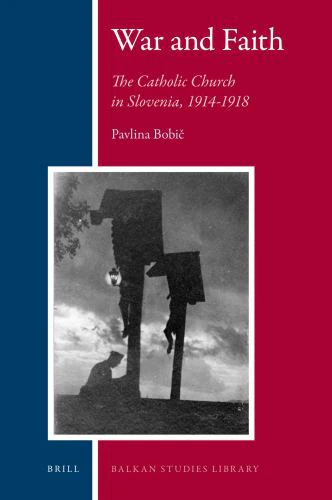
Ch. one is occupied with the rhetoric employed by the Catholic Church in the context of Franz Ferdinand's assassination and the declaration of the state of siege that succeeded it. It also brings into focus theological discourses about war and God, punishment and atonement, as well as popular reactions to the outbreak of hostilities; Ch. two examines the ways in which the Slovenian clergy interpreted the motives for the Italian declaration of war on Austria-Hungary in 1915, but it also aims to establish whether there were any significant traits in the Slovenians' perception of the new antagonist arising on the monarchy's western borders. The Church faced a dilemma when transmitting patriotic calls to defend Slovenian homeland as the enemy's forces consisted predominantly of Catholics; Ch. three addresses the Church's interpretation of suffering and sacrifice, while further exploring the problem of how both war and faith were perceived by the Slovenian soldiers in the field. It also examines the concept of manliness in the context of religion; inherent in this issue are the heroic ideal and the definition of a worthy Christian soldier that, at least in the religious outlook, possessed the answer to the question of what motives drove the men to fight; Ch. four analyses (religious) symbolism of the female body, which could easily be interpreted as a meaningful antipode to the brutality of war. The role and image of the Virgin Mary provided an excellent framework within which the idea(l)s of womanhood could be further elaborated and linked with the suffering men in the field. Ch. four also addresses the civilian responses to the war and political persecutions of Slovenian suspects under semi-absolutist regime, while establishing whether the clergy's predictions about moral renewal had any foundations; Chapters five and six discuss the Church's role in forming the Slovenians' political and essentially national orientation between 1916 and 1918. What were the key theological concepts in the clergy's (and politicians') arguments, when debating the empire's internal reforms? And, above all, what prompted the prince-bishop of Ljubljana to take a decisive lead in national policy?
Description
Ch. one is occupied with the rhetoric employed by the Catholic Church in the context of Franz Ferdinand's assassination and the declaration of the state of siege that succeeded it. It also brings into focus theological discourses about war and God, punishment and atonement, as well as popular reactions to the outbreak of hostilities; Ch. two examines the ways in which the Slovenian clergy interpreted the motives for the Italian declaration of war on Austria-Hungary in 1915, but it also aims to establish whether there were any significant traits in the Slovenians' perception of the new antagonist arising on the monarchy's western borders. The Church faced a dilemma when transmitting patriotic calls to defend Slovenian homeland as the enemy's forces consisted predominantly of Catholics; Ch. three addresses the Church's interpretation of suffering and sacrifice, while further exploring the problem of how both war and faith were perceived by the Slovenian soldiers in the field. It also examines the concept of manliness in the context of religion; inherent in this issue are the heroic ideal and the definition of a worthy Christian soldier that, at least in the religious outlook, possessed the answer to the question of what motives drove the men to fight; Ch. four analyses (religious) symbolism of the female body, which could easily be interpreted as a meaningful antipode to the brutality of war. The role and image of the Virgin Mary provided an excellent framework within which the idea(l)s of womanhood could be further elaborated and linked with the suffering men in the field. Ch. four also addresses the civilian responses to the war and political persecutions of Slovenian suspects under semi-absolutist regime, while establishing whether the clergy's predictions about moral renewal had any foundations; Chapters five and six discuss the Church's role in forming the Slovenians' political and essentially national orientation between 1916 and 1918. What were the key theological concepts in the clergy's (and politicians') arguments, when debating the empire's internal reforms? And, above all, what prompted the prince-bishop of Ljubljana to take a decisive lead in national policy?