The Story
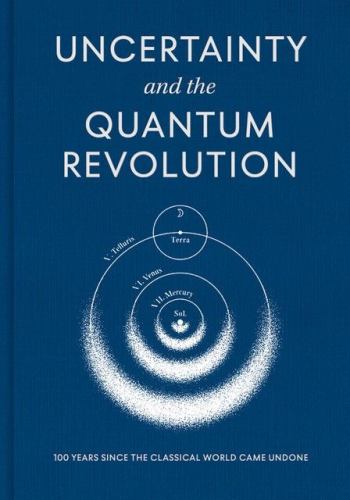
Essays examining the evolution of scientific understanding on the one hundredth anniversary of quantum mechanics.
In 1925 and 1926, the near-simultaneous development of two seemingly different mathematical approaches describing the behavior of subatomic particles revolutionized our understanding of the nature of matter. Werner Heisenberg's matrix mechanics and Erwin Schrödinger's wave equation were soon shown to be equivalent formulations of the same underlying concepts, and this new field of quantum mechanics immediately upended traditional conceptions of reality. One puzzling implication of the theory was that random chance seemed to govern behavior at the microscopic level. Another was Heisenberg's formulation of the uncertainty principle, which showed that it is impossible to accurately determine the simultaneous position and momentum of a subatomic particle. Combined with Albert Einstein's theory of relativity, the quantum revolution shattered Isaac Newton's centuries-old concepts of absolute space and time, and with it the deterministic predictability of classical mechanics.
The one hundredth anniversary of quantum mechanics presents a perfect opportunity to examine the historical foundations upon which these innovations were built and to explore the subsequent evolution of scientific understanding resulting from the new theory. The turn of the twentieth century saw a series of startling discoveries, including X-rays, radioactivity, and the electron, as well as the birth of quantum theory and special relativity with its famous equation E=mc2. By the end of World War II, the equivalence of mass and energy would radically alter the trajectory of human affairs following the detonation of the first atomic bomb.
Description
Essays examining the evolution of scientific understanding on the one hundredth anniversary of quantum mechanics.
In 1925 and 1926, the near-simultaneous development of two seemingly different mathematical approaches describing the behavior of subatomic particles revolutionized our understanding of the nature of matter. Werner Heisenberg's matrix mechanics and Erwin Schrödinger's wave equation were soon shown to be equivalent formulations of the same underlying concepts, and this new field of quantum mechanics immediately upended traditional conceptions of reality. One puzzling implication of the theory was that random chance seemed to govern behavior at the microscopic level. Another was Heisenberg's formulation of the uncertainty principle, which showed that it is impossible to accurately determine the simultaneous position and momentum of a subatomic particle. Combined with Albert Einstein's theory of relativity, the quantum revolution shattered Isaac Newton's centuries-old concepts of absolute space and time, and with it the deterministic predictability of classical mechanics.
The one hundredth anniversary of quantum mechanics presents a perfect opportunity to examine the historical foundations upon which these innovations were built and to explore the subsequent evolution of scientific understanding resulting from the new theory. The turn of the twentieth century saw a series of startling discoveries, including X-rays, radioactivity, and the electron, as well as the birth of quantum theory and special relativity with its famous equation E=mc2. By the end of World War II, the equivalence of mass and energy would radically alter the trajectory of human affairs following the detonation of the first atomic bomb.