The Story
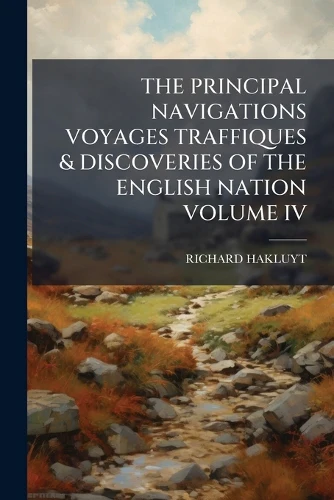
"The Principal Navigations, Voyages, Traffiques & Discoveries of the English Nation, Volume IV" is a cornerstone of English maritime and exploration literature. Penned by Richard Hakluyt, this volume offers a detailed account of the voyages, explorations, and commercial activities undertaken by the English during a pivotal era of global discovery. Hakluyt's work not only documents the geographical achievements of English seafarers but also reveals the political, economic, and cultural motivations driving these ambitious expeditions.
This collection of primary source narratives provides invaluable insights into the challenges, triumphs, and encounters of English explorers as they navigated uncharted waters and established trade routes across the globe. For historians, researchers, and enthusiasts of maritime history, "The Principal Navigations" remains an essential resource, offering a firsthand glimpse into the age of exploration and the shaping of the modern world.
This work has been selected by scholars as being culturally important, and is part of the knowledge base of civilization as we know it. This work was reproduced from the original artifact, and remains as true to the original work as possible. Therefore, you will see the original copyright references, library stamps (as most of these works have been housed in our most important libraries around the world), and other notations in the work.
This work is in the public domain in the United States of America, and possibly other nations. Within the United States, you may freely copy and distribute this work, as no entity (individual or corporate) has a copyright on the body of the work.
As a reproduction of a historical artifact, this work may contain missing or blurred pages, poor pictures, errant marks, etc. Scholars believe, and we concur, that this work is important enough to be preserved, reproduced, and made generally available to the public. We appreciate your support of the preservation process, and thank you for being an important part of keeping this knowledge alive and relevant.
Description
"The Principal Navigations, Voyages, Traffiques & Discoveries of the English Nation, Volume IV" is a cornerstone of English maritime and exploration literature. Penned by Richard Hakluyt, this volume offers a detailed account of the voyages, explorations, and commercial activities undertaken by the English during a pivotal era of global discovery. Hakluyt's work not only documents the geographical achievements of English seafarers but also reveals the political, economic, and cultural motivations driving these ambitious expeditions.
This collection of primary source narratives provides invaluable insights into the challenges, triumphs, and encounters of English explorers as they navigated uncharted waters and established trade routes across the globe. For historians, researchers, and enthusiasts of maritime history, "The Principal Navigations" remains an essential resource, offering a firsthand glimpse into the age of exploration and the shaping of the modern world.
This work has been selected by scholars as being culturally important, and is part of the knowledge base of civilization as we know it. This work was reproduced from the original artifact, and remains as true to the original work as possible. Therefore, you will see the original copyright references, library stamps (as most of these works have been housed in our most important libraries around the world), and other notations in the work.
This work is in the public domain in the United States of America, and possibly other nations. Within the United States, you may freely copy and distribute this work, as no entity (individual or corporate) has a copyright on the body of the work.
As a reproduction of a historical artifact, this work may contain missing or blurred pages, poor pictures, errant marks, etc. Scholars believe, and we concur, that this work is important enough to be preserved, reproduced, and made generally available to the public. We appreciate your support of the preservation process, and thank you for being an important part of keeping this knowledge alive and relevant.