Original: $26.99
-65%$26.99
$9.45The Story
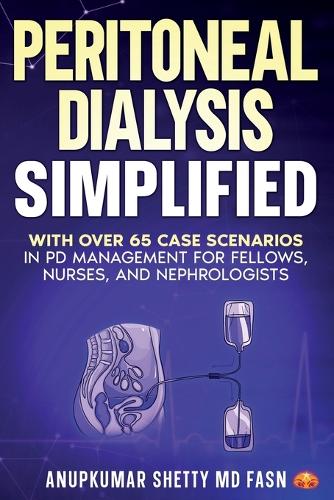
A practical, case-based guide to mastering real-world peritoneal dialysis.
Most dialysis textbooks teach theory.
This book teaches decision-making at the bedside.
Peritoneal Dialysis Simplified is a clinically focused handbook built around more than 65 authentic and fictionalized patient scenarios drawn from everyday nephrology practice. Each case walks the reader through how experienced clinicians actually think -- not just what guidelines say.
Designed for nephrology fellows, PD nurses, and practicing nephrologists worldwide, this book bridges the gap between training and confident independent management.
Why This Book Is Different
Instead of long academic chapters, you learn through real clinical problems:
-
Adequacy controversies and Kt/V interpretation
-
PD vs HD decision making
-
Non-infectious complications
-
Exit-site infections, refractory peritonitis and catheter dilemmas
-
UF failure and membrane changes
-
Volume management challenges
-
When guidelines help -- and when judgment matters more
Each case mirrors actual rounds discussions:
What is happening - What matters - What to do next - Why
Practical Knowledge You Can Use Immediately
This book helps you develop the clinical instincts rarely taught in training:
- Troubleshoot CAPD and APD complications
- Understand ultrafiltration physiology
- Interpret adequacy beyond numbers
- Manage difficult PD infections
- Decide when to salvage vs remove a catheter
- Adjust prescriptions confidently
- Communicate with patients and dialysis teams
A Real-World Perspective on Adequacy & Kt/V
The book presents a combination of clinical practice guidelines and a US-practice-oriented approach to measurable dialysis performance metrics, balancing goal directed management, physiologic reasoning with regulatory expectations.
Rather than rejecting guidelines, it explains how to:
-
Stay compliant with ESRD quality programs
-
Understand why targets exist
-
Avoid treating the number instead of the patient
Built from Experience + Evidence
Blending published literature, guideline knowledge, and decades of clinical experience, the author provides insights rarely found in traditional references -- the small decisions that determine whether PD succeeds or fails.
Who Should Read This
-
Nephrology Fellows preparing for independent practice
-
Peritoneal Dialysis Nurses managing daily patient care and Dialysis Administrators
-
Clinical Nephrologists supervising dialysis programs
-
Training programs seeking a teaching companion text
-
Dialysis units wanting case-conference material
The Goal
To make you comfortable managing peritoneal dialysis without memorizing algorithms -- by thinking like a clinician.
Because PD is not learned from slides.
It is learned from patients.
If you manage peritoneal dialysis -- or are learning to -- this is the book you will keep within reach during clinic and rounds. This is a book that every trainee must have.
Description
A practical, case-based guide to mastering real-world peritoneal dialysis.
Most dialysis textbooks teach theory.
This book teaches decision-making at the bedside.
Peritoneal Dialysis Simplified is a clinically focused handbook built around more than 65 authentic and fictionalized patient scenarios drawn from everyday nephrology practice. Each case walks the reader through how experienced clinicians actually think -- not just what guidelines say.
Designed for nephrology fellows, PD nurses, and practicing nephrologists worldwide, this book bridges the gap between training and confident independent management.
Why This Book Is Different
Instead of long academic chapters, you learn through real clinical problems:
-
Adequacy controversies and Kt/V interpretation
-
PD vs HD decision making
-
Non-infectious complications
-
Exit-site infections, refractory peritonitis and catheter dilemmas
-
UF failure and membrane changes
-
Volume management challenges
-
When guidelines help -- and when judgment matters more
Each case mirrors actual rounds discussions:
What is happening - What matters - What to do next - Why
Practical Knowledge You Can Use Immediately
This book helps you develop the clinical instincts rarely taught in training:
- Troubleshoot CAPD and APD complications
- Understand ultrafiltration physiology
- Interpret adequacy beyond numbers
- Manage difficult PD infections
- Decide when to salvage vs remove a catheter
- Adjust prescriptions confidently
- Communicate with patients and dialysis teams
A Real-World Perspective on Adequacy & Kt/V
The book presents a combination of clinical practice guidelines and a US-practice-oriented approach to measurable dialysis performance metrics, balancing goal directed management, physiologic reasoning with regulatory expectations.
Rather than rejecting guidelines, it explains how to:
-
Stay compliant with ESRD quality programs
-
Understand why targets exist
-
Avoid treating the number instead of the patient
Built from Experience + Evidence
Blending published literature, guideline knowledge, and decades of clinical experience, the author provides insights rarely found in traditional references -- the small decisions that determine whether PD succeeds or fails.
Who Should Read This
-
Nephrology Fellows preparing for independent practice
-
Peritoneal Dialysis Nurses managing daily patient care and Dialysis Administrators
-
Clinical Nephrologists supervising dialysis programs
-
Training programs seeking a teaching companion text
-
Dialysis units wanting case-conference material
The Goal
To make you comfortable managing peritoneal dialysis without memorizing algorithms -- by thinking like a clinician.
Because PD is not learned from slides.
It is learned from patients.
If you manage peritoneal dialysis -- or are learning to -- this is the book you will keep within reach during clinic and rounds. This is a book that every trainee must have.