$287.39
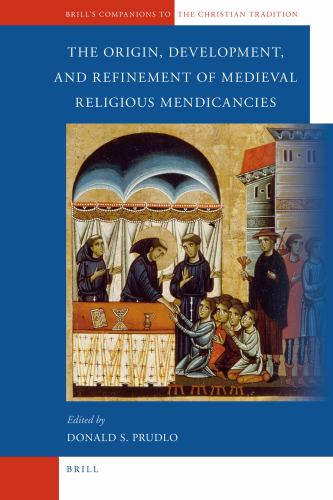
The Origin, Development, and Refinement of Medieval Religious Mendicancies—
$287.39
The Story
The nature of mendicancy as it developed among various religious orders during the thirteenth and fourteenth centuries is the subject of considerable debate. In spite of this, little in the way of a comprehensive review of the phenomenon as a whole has been undertaken. What has been done has either been order-specific (with an emphasis on the Friars Minor) or has focused on points of special conflict regarding the mendicant ideal (University debates, Spiritual Franciscans). Little work exists on the roots of mendicancy, or on the creative ways in which mendicancy was understood (and deprecated) in various quarters. Few studies try to bring together both the theory and practice of religious mendicancy. The effect that events had in molding and changing the mendicant ideal is also often neglected, as are the ways in which it was independently and creatively appropriated by individuals and groups. Needless to say, all of this is strange for a movement that most are content to label “Mendicant.” Perhaps it may even be the case that “mendicancy” is not useful as a descriptive concept. The purpose and intention of this handbook is to offer an analysis of the term and to present an up-to-date and comprehensive introduction to the phenomenon of religious mendicancy in the central and later middle ages. It provides a contextualized guide that will introduce the central issues in contemporary scholarship regarding the mendicant orders. This project approaches the controversies from a multitude of angles and unites in one volume the insights of different disciplines such as social and intellectual history, literary analysis, and theology. The present work is divided into three main sections, I) The origins and foundations of medieval mendicancy, II) The development and articulation of mendicant ideals, III) The reception and appropriation of mendicancy in the middle ages. The chapters herein serve as a solid point of departure for advanced students and scholars.
Description
The nature of mendicancy as it developed among various religious orders during the thirteenth and fourteenth centuries is the subject of considerable debate. In spite of this, little in the way of a comprehensive review of the phenomenon as a whole has been undertaken. What has been done has either been order-specific (with an emphasis on the Friars Minor) or has focused on points of special conflict regarding the mendicant ideal (University debates, Spiritual Franciscans). Little work exists on the roots of mendicancy, or on the creative ways in which mendicancy was understood (and deprecated) in various quarters. Few studies try to bring together both the theory and practice of religious mendicancy. The effect that events had in molding and changing the mendicant ideal is also often neglected, as are the ways in which it was independently and creatively appropriated by individuals and groups. Needless to say, all of this is strange for a movement that most are content to label “Mendicant.” Perhaps it may even be the case that “mendicancy” is not useful as a descriptive concept. The purpose and intention of this handbook is to offer an analysis of the term and to present an up-to-date and comprehensive introduction to the phenomenon of religious mendicancy in the central and later middle ages. It provides a contextualized guide that will introduce the central issues in contemporary scholarship regarding the mendicant orders. This project approaches the controversies from a multitude of angles and unites in one volume the insights of different disciplines such as social and intellectual history, literary analysis, and theology. The present work is divided into three main sections, I) The origins and foundations of medieval mendicancy, II) The development and articulation of mendicant ideals, III) The reception and appropriation of mendicancy in the middle ages. The chapters herein serve as a solid point of departure for advanced students and scholars.