Original: $77.69
-65%$77.69
$27.19The Story
The United States?Mexico border has been a contested space and a political and ideological apparatus since the early twentieth century. While today we think of the border as a method to exclude people from the United States, the earliest curfews at the line between the two countries were designed to keep Americans within their territorial boundaries and reinforce the moral geography of the United States.
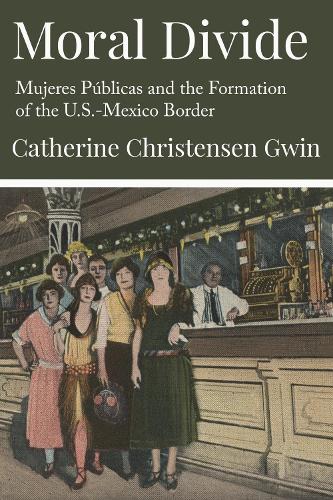
In Moral Divide Catherine Christensen Gwin sheds new light on a largely forgotten chapter in the history of the U.S.-Mexico border, when it was a place of agency among Euro-American clubwomen reformers and sex workers. White women in California?s Progressive movement sowed panic over prostitution, pushing American sex workers into the vice districts of Mexico, where American pleasure seekers followed. In response, clubwomen initiated a crusade to control U.S. citizens and their pursuit of illicit leisure in Mexico. These ideals of morality were used to enforce border restrictions and developed stereotypes of Mexicans as rapists and traffickers. Christensen Gwin brings the Mexican perspective on vice tourism to the fore, showing how Mexican officials responded to the sex trade, while also discussing the invention and juxtaposition of the white human trafficking victim and the criminal drug trafficking woman. The ?moral divide? that resulted from these gendered and racialized politics of national purification set the stage for the exclusionary border regime we live with today.
Description
The United States?Mexico border has been a contested space and a political and ideological apparatus since the early twentieth century. While today we think of the border as a method to exclude people from the United States, the earliest curfews at the line between the two countries were designed to keep Americans within their territorial boundaries and reinforce the moral geography of the United States.
In Moral Divide Catherine Christensen Gwin sheds new light on a largely forgotten chapter in the history of the U.S.-Mexico border, when it was a place of agency among Euro-American clubwomen reformers and sex workers. White women in California?s Progressive movement sowed panic over prostitution, pushing American sex workers into the vice districts of Mexico, where American pleasure seekers followed. In response, clubwomen initiated a crusade to control U.S. citizens and their pursuit of illicit leisure in Mexico. These ideals of morality were used to enforce border restrictions and developed stereotypes of Mexicans as rapists and traffickers. Christensen Gwin brings the Mexican perspective on vice tourism to the fore, showing how Mexican officials responded to the sex trade, while also discussing the invention and juxtaposition of the white human trafficking victim and the criminal drug trafficking woman. The ?moral divide? that resulted from these gendered and racialized politics of national purification set the stage for the exclusionary border regime we live with today.