Original: $24.95
-65%$24.95
$8.73The Story
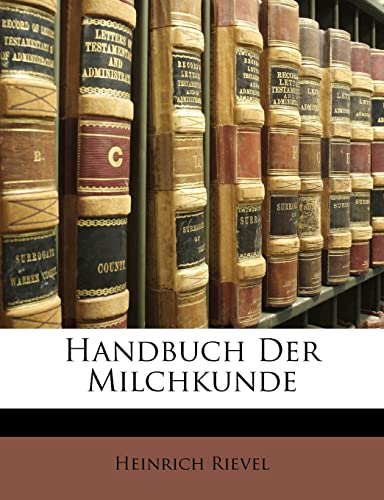
Handbuch Der Milchkunde, verfasst von Heinrich Rievel, ist ein umfassendes Handbuch über Milchwissenschaften, das im Jahr 1907 veröffentlicht wurde. Dieses Werk bietet einen detaillierten Einblick in die Milchproduktion und -verarbeitung. Es behandelt die biologischen und technischen Aspekte der Milchwirtschaft und beleuchtet die Verfahren zur Gewinnung, Analyse und Verarbeitung von Milch. Das Buch ist eine wertvolle Ressource für Studierende, Forscher und Fachleute im Bereich der Agrarwissenschaften und der Lebensmitteltechnologie.
Rievels Werk umfasst Themen wie Milchqualität, Hygienevorschriften und die verschiedenen Technologien zur Herstellung von Milchprodukten. Es bietet eine gründliche Untersuchung der chemischen Zusammensetzung von Milch und der Faktoren, die ihre Qualität beeinflussen können. Als ein Klassiker auf seinem Gebiet bleibt 'Handbuch Der Milchkunde' eine wichtige Referenz für alle, die sich mit den Grundlagen und Fortschritten der Milchwissenschaften auseinandersetzen.
This work has been selected by scholars as being culturally important, and is part of the knowledge base of civilization as we know it. This work was reproduced from the original artifact, and remains as true to the original work as possible. Therefore, you will see the original copyright references, library stamps (as most of these works have been housed in our most important libraries around the world), and other notations in the work.
This work is in the public domain in the United States of America, and possibly other nations. Within the United States, you may freely copy and distribute this work, as no entity (individual or corporate) has a copyright on the body of the work.
As a reproduction of a historical artifact, this work may contain missing or blurred pages, poor pictures, errant marks, etc. Scholars believe, and we concur, that this work is important enough to be preserved, reproduced, and made generally available to the public. We appreciate your support of the preservation process, and thank you for being an important part of keeping this knowledge alive and relevant.
Description
Handbuch Der Milchkunde, verfasst von Heinrich Rievel, ist ein umfassendes Handbuch über Milchwissenschaften, das im Jahr 1907 veröffentlicht wurde. Dieses Werk bietet einen detaillierten Einblick in die Milchproduktion und -verarbeitung. Es behandelt die biologischen und technischen Aspekte der Milchwirtschaft und beleuchtet die Verfahren zur Gewinnung, Analyse und Verarbeitung von Milch. Das Buch ist eine wertvolle Ressource für Studierende, Forscher und Fachleute im Bereich der Agrarwissenschaften und der Lebensmitteltechnologie.
Rievels Werk umfasst Themen wie Milchqualität, Hygienevorschriften und die verschiedenen Technologien zur Herstellung von Milchprodukten. Es bietet eine gründliche Untersuchung der chemischen Zusammensetzung von Milch und der Faktoren, die ihre Qualität beeinflussen können. Als ein Klassiker auf seinem Gebiet bleibt 'Handbuch Der Milchkunde' eine wichtige Referenz für alle, die sich mit den Grundlagen und Fortschritten der Milchwissenschaften auseinandersetzen.
This work has been selected by scholars as being culturally important, and is part of the knowledge base of civilization as we know it. This work was reproduced from the original artifact, and remains as true to the original work as possible. Therefore, you will see the original copyright references, library stamps (as most of these works have been housed in our most important libraries around the world), and other notations in the work.
This work is in the public domain in the United States of America, and possibly other nations. Within the United States, you may freely copy and distribute this work, as no entity (individual or corporate) has a copyright on the body of the work.
As a reproduction of a historical artifact, this work may contain missing or blurred pages, poor pictures, errant marks, etc. Scholars believe, and we concur, that this work is important enough to be preserved, reproduced, and made generally available to the public. We appreciate your support of the preservation process, and thank you for being an important part of keeping this knowledge alive and relevant.