$22.15
Original: $63.29
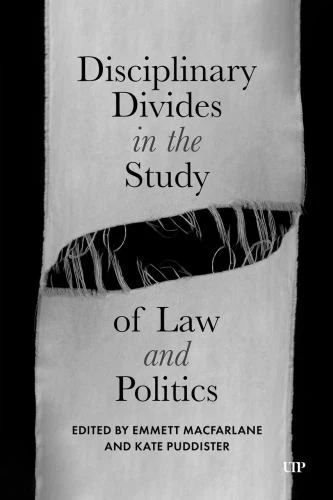
-65%Disciplinary Divides in the Study of Law and Politics—
$63.29
$22.15The Story
This book studies the "disciplinary divides" between law and political science, including conceptual, methodological, and normative differences in how each field approaches policy, institutions, and legal phenomena. Disciplinary Divides in the Study of Law and Politics critically analyses these fault lines and proposes strategies to bridge them. The chapters identify key gaps, disagreements, and challenges in the study of law and politics through fresh empirical analyses, including studies of rights (such as Charter and Indigenous rights) and of institutional actors and processes – courts, legislatures, executives, expert witnesses, judicial selection, constitutional amendment, and government lawyers. The volume addresses a wide range of legal domains, including constitutional, administrative, immigration and refugee, federalism, and electoral law, while also highlighting areas where deeper interdisciplinary engagement is needed. Several chapters contribute to theoretical development, and many adopt a forward-looking perspective, identifying urgent research questions and setting future research agendas. Collectively, the contributions demonstrate how greater interdisciplinary collaboration can enhance our understanding of law’s relationship to power, public policy, and society.
Description
This book studies the "disciplinary divides" between law and political science, including conceptual, methodological, and normative differences in how each field approaches policy, institutions, and legal phenomena. Disciplinary Divides in the Study of Law and Politics critically analyses these fault lines and proposes strategies to bridge them. The chapters identify key gaps, disagreements, and challenges in the study of law and politics through fresh empirical analyses, including studies of rights (such as Charter and Indigenous rights) and of institutional actors and processes – courts, legislatures, executives, expert witnesses, judicial selection, constitutional amendment, and government lawyers. The volume addresses a wide range of legal domains, including constitutional, administrative, immigration and refugee, federalism, and electoral law, while also highlighting areas where deeper interdisciplinary engagement is needed. Several chapters contribute to theoretical development, and many adopt a forward-looking perspective, identifying urgent research questions and setting future research agendas. Collectively, the contributions demonstrate how greater interdisciplinary collaboration can enhance our understanding of law’s relationship to power, public policy, and society.